
The Global Internet Forum to Counter Terrorism (GIFCT) recently convened its 2026 Annual Member Forum, hosted in partnership with its Operating Board Chair, Meta. The event brought together GIFCT’s 44 member companies and Operating Board leadership for a day of sharing insights, interactive exercises, and forward planning.
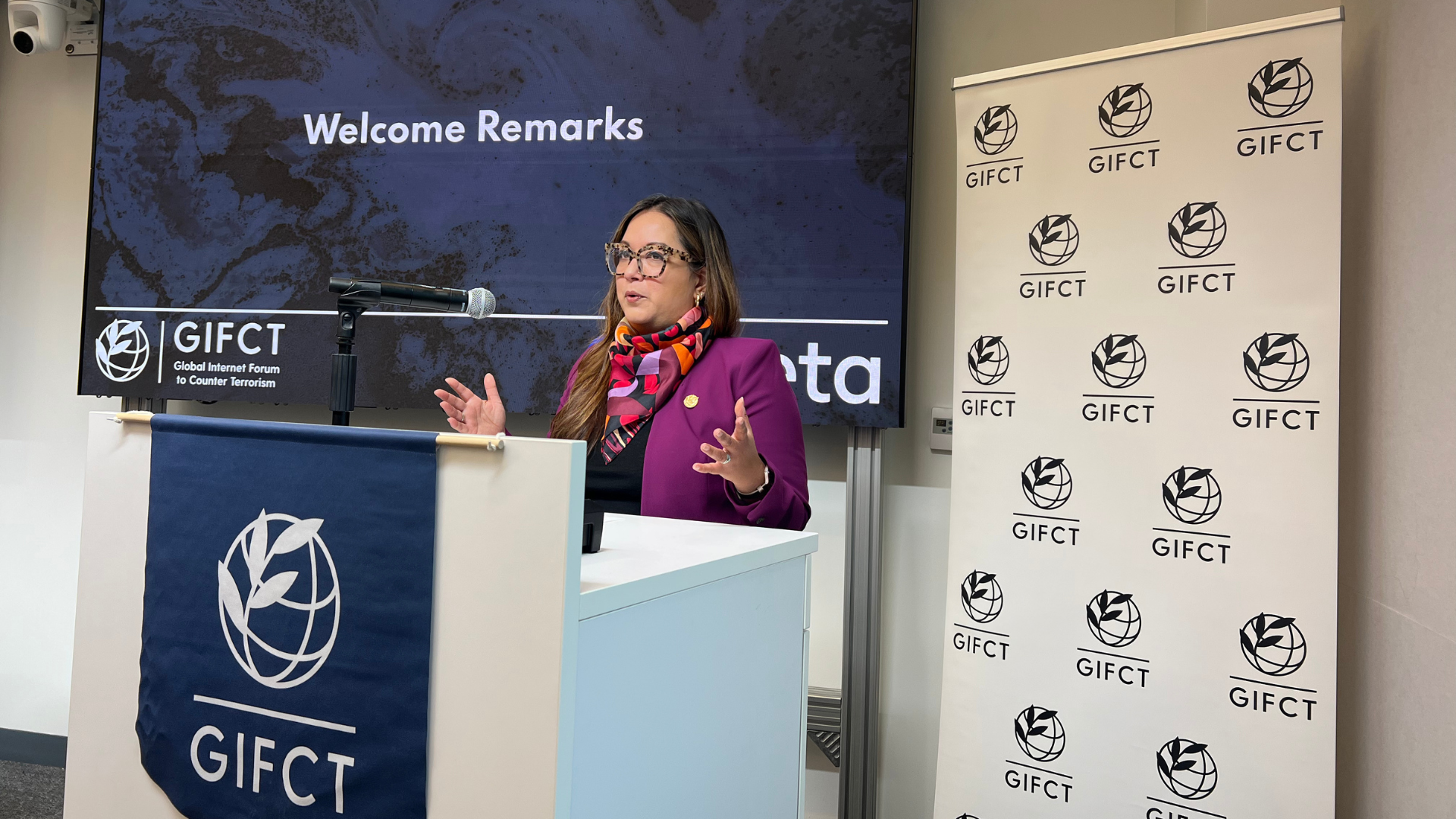
Welcome Remarks
GIFCT Executive Director Naureen Chowdhury Fink and Operating Board Chair David Tessler, Director of Dangerous Organizations and Individuals Policy at Meta, opened the meeting with reflections on a year defined by global engagement, expanded offerings, and adaptation to evolving harms.
Executive Director Fink highlighted how GIFCT’s member-centric approach has driven progress across all of the organization’s workstreams, with milestones from the past year including the continued growth and diversification of GIFCT’s member community, support for new and existing members through the Membership Advisory Program (MAP), a record number of Incident Response Framework (IRF) activations, five signature events spanning diverse themes and regions, and the expansion of the Operating Board.
“2026 has been a year of growth for us, from welcoming Discord and Twitch to our Board to deepening partnerships with governments, academia, and civil society around the world. As the threat landscape shifts both online and offline, the needs of our members are changing. In response, we’re evolving our technical solutions, tools, and resources to strengthen member trust and safety efforts and our commitment to our shared mission,” said Executive Director Fink.
Alongside strengthening its suite of member resources, GIFCT has continued to expand its global partnerships and multi-stakeholder community. That collaboration is more important than ever: as the Board Chair noted, coordinated harmful activity is increasingly hybridized, blending tactics and spanning harm types in ways that challenge collective responses and demand cross-sector action.
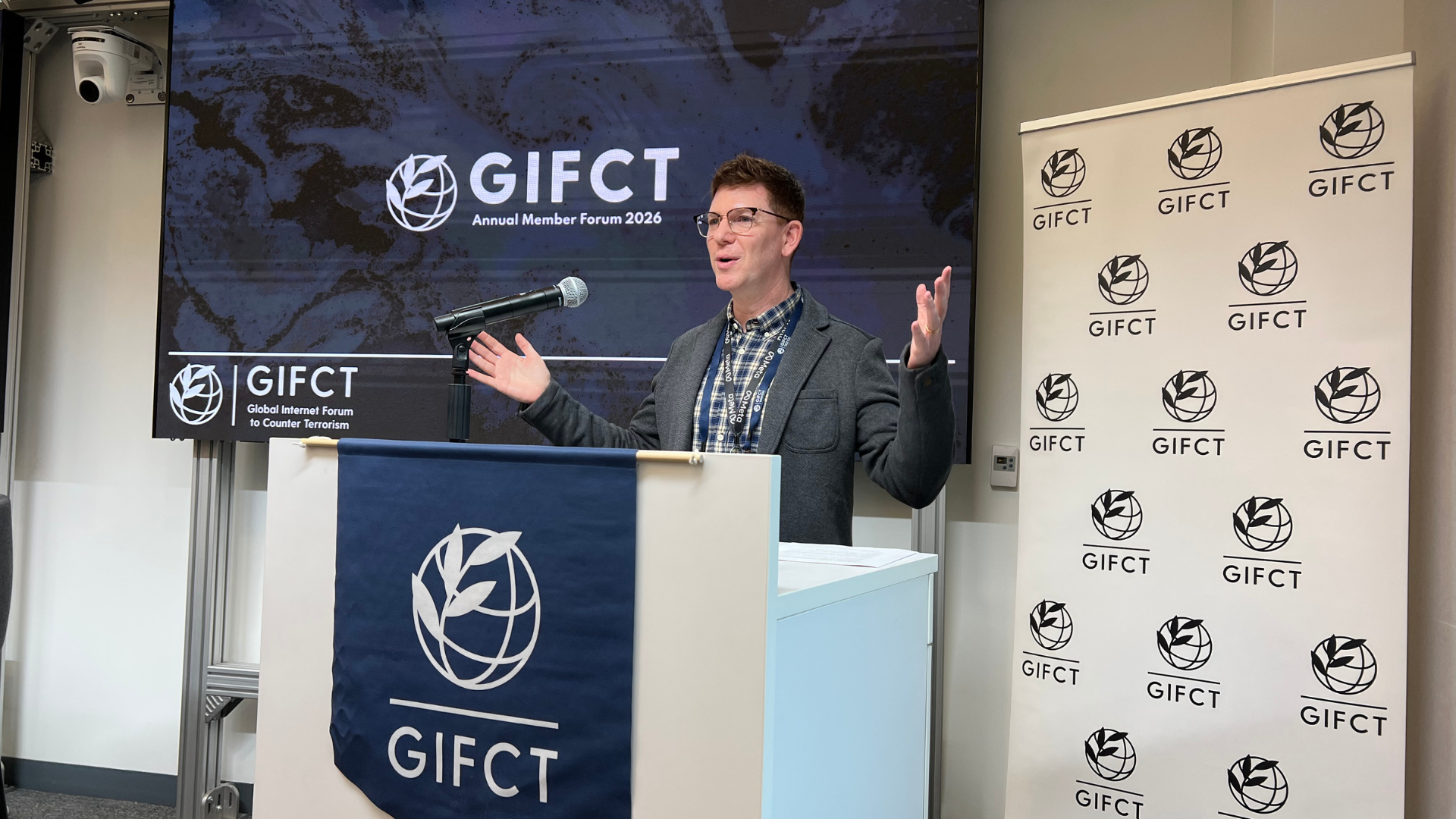
Board Updates and Elections
GIFCT’s Operating Board, made up of members from its founding companies and At-Large general GIFCT members elected on an annual basis, plays a key role in supporting the organization and guiding its strategic development.
The session offered members a window into how the Board provides strategic advice and direction to GIFCT by balancing oversight with the collaborative approach that defines the organization. Reflections from Operating Board members underscored the value of platform-to-platform collaboration as terrorists and violent extremists increasingly hop between services, noting that GIFCT creates a space where tech companies can work together against a harm no single platform or sector can address alone. A key priority for the year, it was emphasized, was continuing to strengthen GIFCT’s governance by opening an additional At-Large seat on the Operating Board and evolving its multi-stakeholder engagement body toward a more flexible, integrated, and expertise-driven model.
Candidate companies seeking election to the At-Large seats had an opportunity to share their vision and goals with the broader membership, and the election results will be announced once voting concludes.
GNET Threat Landscape Assessment
The Global Network on Extremism and Technology (GNET), GIFCT’s academic research arm housed within the Centre for Statecraft and National Security (CSNS) at King’s College London, publishes findings that explore the intersections of technology, terrorism, and violent extremism, and provides GIFCT members with exclusive research tailored to their trust and safety needs.
GNET’s briefing on research themes of artificial intelligence (AI), nihilistic violent extremism, and extremism and gaming highlighted that because no single platform can see the full picture, research mapping how terrorists and violent extremists move between large, small, and niche spaces is increasingly important for building stronger defenses. GNET experts shared how harm types such as child safety, sadistic exploitation, and fraud are increasingly intertwined, prompting platforms to reconsider how internal teams collaborate across silos and how policies can address these harms effectively and in a rights-respecting way, and how AI is being leveraged to evade moderation, recruit and radicalize, and provide technical assistance to perpetrators. Experts also revealed how adversaries target gaming and gaming-adjacent spaces for recruitment, radicalization, and fundraising, but noted that GNET’s research in the space has been reinforced by its recent partnership with the Extremism and Gaming Research Network (EGRN).
The session concluded with an overview of the Repository of Extremist Aligned Documents (READ), which gives GIFCT members exclusive access to annotated manifestos, many of which relate to IRF activations. Annotations identify ideological themes, terminology, cultural references, and other context to help practitioners understand the material and the communities from which it emerges.
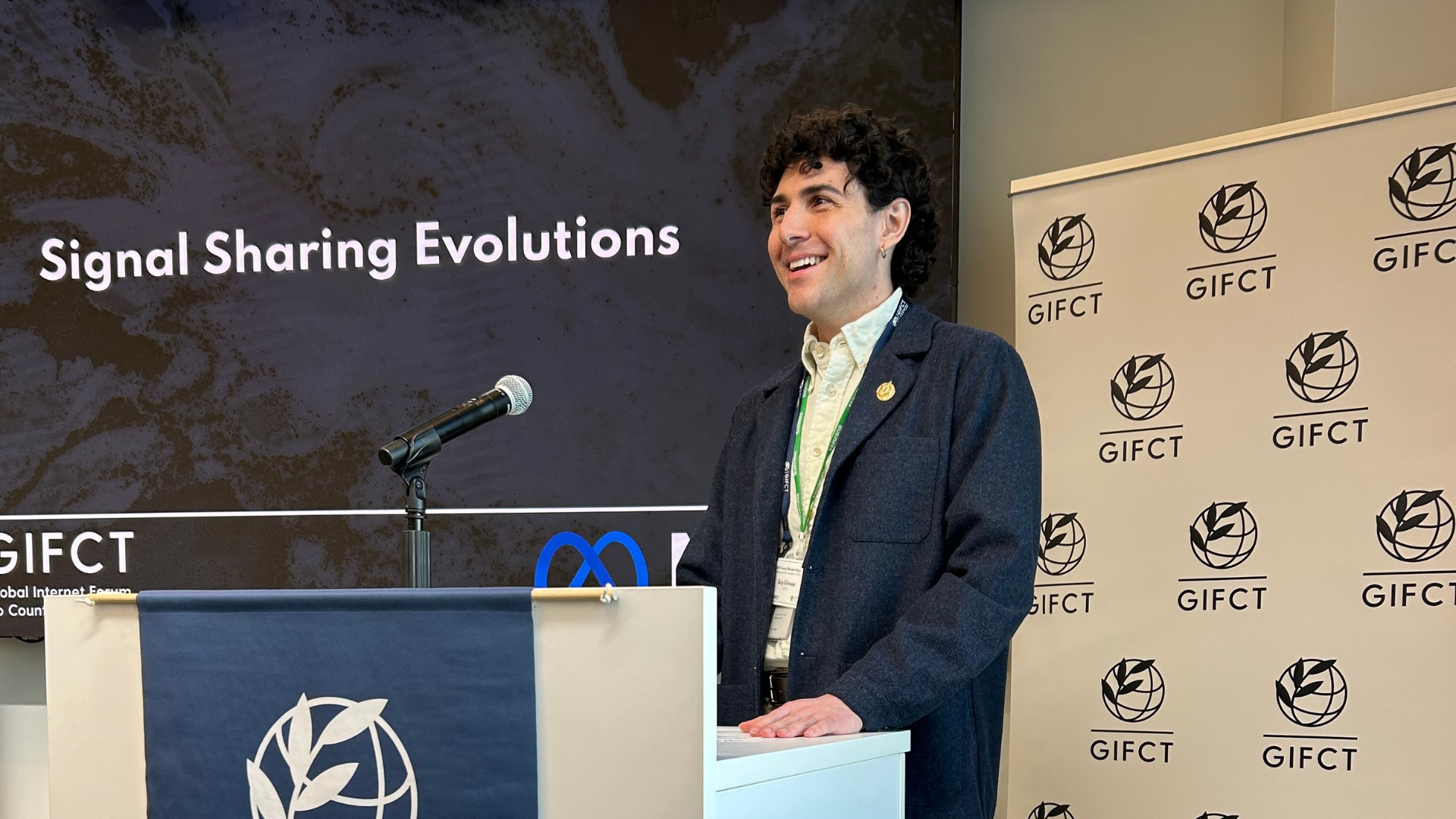
Signal Sharing Evolutions
As terrorists and violent extremists continue to evolve and adapt to the operational landscape, expanding the scope of signal sharing has become a key priority for GIFCT members and stakeholders. Recent events on the margins of the UN General Assembly, in Mexico City, and beyond, have explored how harms are becoming increasingly hybridized, highlighting the need for more flexible, adaptable cross-platform signal-sharing solutions.
In response, GIFCT and its membership community are exploring ways to strengthen its collective response to evolving threats and harms. Central to this work are GIFCT’s Communities of Practice, an evolution of GIFCT’s traditional Working Group structure, which places greater focus on member trust and safety practitioners, with contributions from multi-stakeholder participants during dedicated sessions.
In 2026, GIFCT convened the Signals Community of Practice (SCOP) to further explore members’ cross-platform signal-sharing needs, giving participants space to discuss threat content and how it informs their trust and safety approaches. SCOP builds on two earlier efforts, the 2024 Hash Sharing Working Group and the 2025 Investigators Community of Practice (ICOP), both of which found that members need non-hashed resources to complement GIFCT’s hash-sharing database. ICOP’s findings also shaped GIFCT’s new Information Sharing Non-Disclosure Agreement (ISNDA), which lays the groundwork for new information-sharing solutions. As GIFCT evolves its tools, it will develop appropriate guardrails in consultation with human rights-oriented multi-stakeholder partners to ensure rights-respecting practices remain a priority.
GIFCT Working Groups
GIFCT Working Groups ensure multi-stakeholder perspectives shape GIFCT’s work. Each year, they take on new themes informed by member feedback, giving members a direct way to engage on the issues that matter most to them.
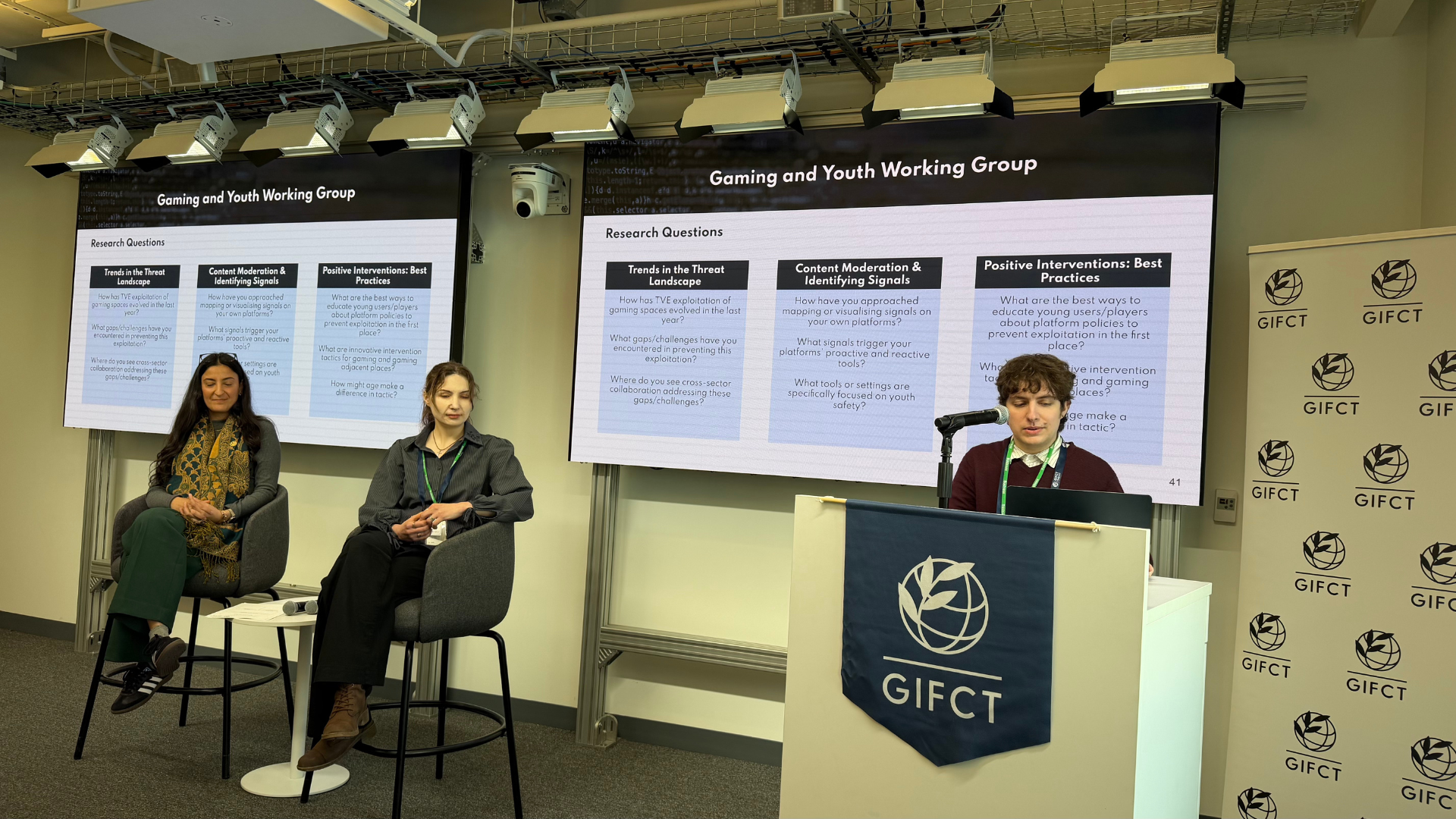
This year’s Working Groups, which enabled member discussions on expanding signal sharing to address specific threats, convened cross-sector representatives to identify and scale practices that prevent the exploitation of youth and gaming spaces, and delivered collaborative analysis of where terrorism, violent extremism, and finance intersect in digital spaces, will publish their outputs during the annual Working Group launch webinar, scheduled for early 2027.
During an interactive brainstorm, members proposed themes for 2027 Working Groups that reflect the diversity of threats they face across surfaces and geographies. Several trends emerged, including a shared interest in how hybridized harms are accounted for in policy and practice. GIFCT is incorporating these suggestions into a slate of Working Groups to be announced early next year.
MAP Overview and Member Engagement
GIFCT’s Membership Engagement team and its new, in-house Membership Advisory Program (MAP) help prospective members meet GIFCT’s membership criteria in ways that suit their needs and timing, and support current GIFCT members with tailored, complementary support designed to meet each company’s unique needs. Since its creation, MAP has welcomed 13 new members, worked with 17 mentees, helped members review new policies and get the most from GIFCT tooling, and ensured member priorities shape GIFCT’s workstreams. The membership team has also helped deliver more than 50 new resources to members throughout 2026, including post-IRF incident bulletins, threat briefings on major moments such as elections and the World Cup, law enforcement guides, and regional signals guides.
In 2026, Monthly Member Meetings gave members a chance to hear directly from peers and multi-stakeholder partners. Over the past 10 months, four member companies and more than 10 partners briefed the community on topics ranging from COM and nihilistic violent extremism threats to Ultras and the World Cup, developments in Syria, and the importance of integrating victims’ perspectives into efforts to prevent and counter violent extremism.
IRF Updates and Tabletop Exercise
In 2025, GIFCT updated its IRF, the mechanism that helps member companies respond to the online dimensions of offline violence. The update streamlined the process and expanded its scope to cover a broader range of harms, better reflecting the current threat landscape and member needs. Since then, activations have reached a record high: GIFCT has activated the IRF 28 times since January 1, 2026, underscoring the update’s value in helping members keep pace with evolving threats.
Simulating a real-time incident of offline violence, GIFCT’s Trust and Safety Solutions Team concluded the afternoon by facilitating an interactive tabletop exercise designed to strengthen member readiness and cross-platform collaboration during live incident scenarios.
Closing Remarks and Year Ahead
Reflecting on a year of evolution and adaptation across GIFCT’s work, Executive Director Fink noted how the threat landscape is increasingly defined by hybridized harms that challenge collective responses and demand strong cross-platform collaboration, as well as tools informed by member needs and expert insight.
As GIFCT looks ahead to 2027, its commitment to deeper collaboration, continued learning, and a strengthened suite of member resources remains firm – grounded in the shared purpose of its global community and a focus on meeting members’ real-time needs.
GIFCT thanks its 2026 Operating Board Chair, Meta, for hosting this day of collaboration, and its members and partners for joining this year’s forum to share critical insights and shape the year ahead.