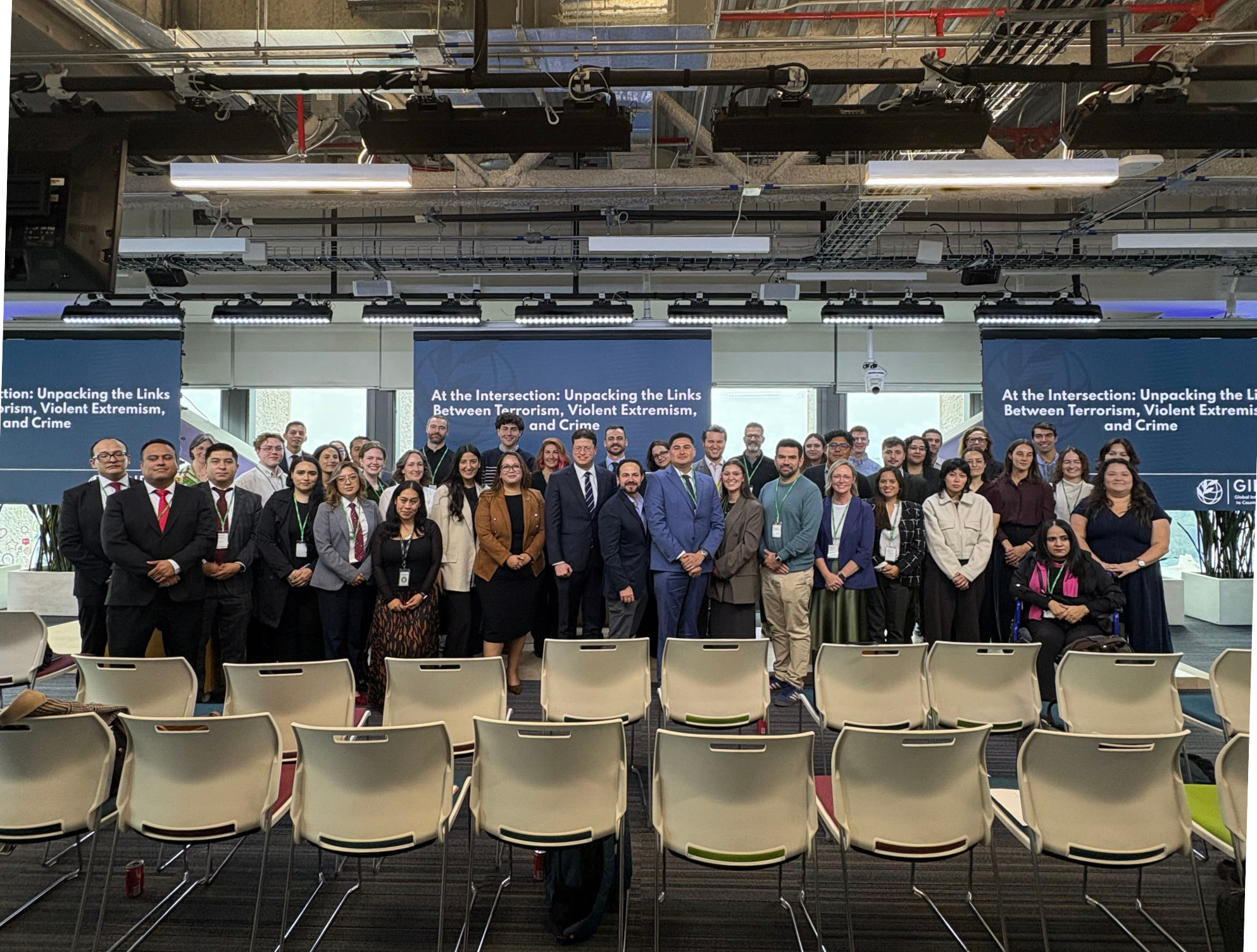
The Global Internet Forum to Counter Terrorism (GIFCT) cohosted, with Meta, GIFCT’s 2026 Operating Board Chair, a workshop in Mexico City last week. At the Intersection: Unpacking the Links Between Terrorism, Violent Extremism, and Crime convened representatives from government and academia, GIFCT member tech platforms, and civil society organizations to explore areas of convergence between terrorism and other violent crimes and the implications for tech platforms and wider policymaking.
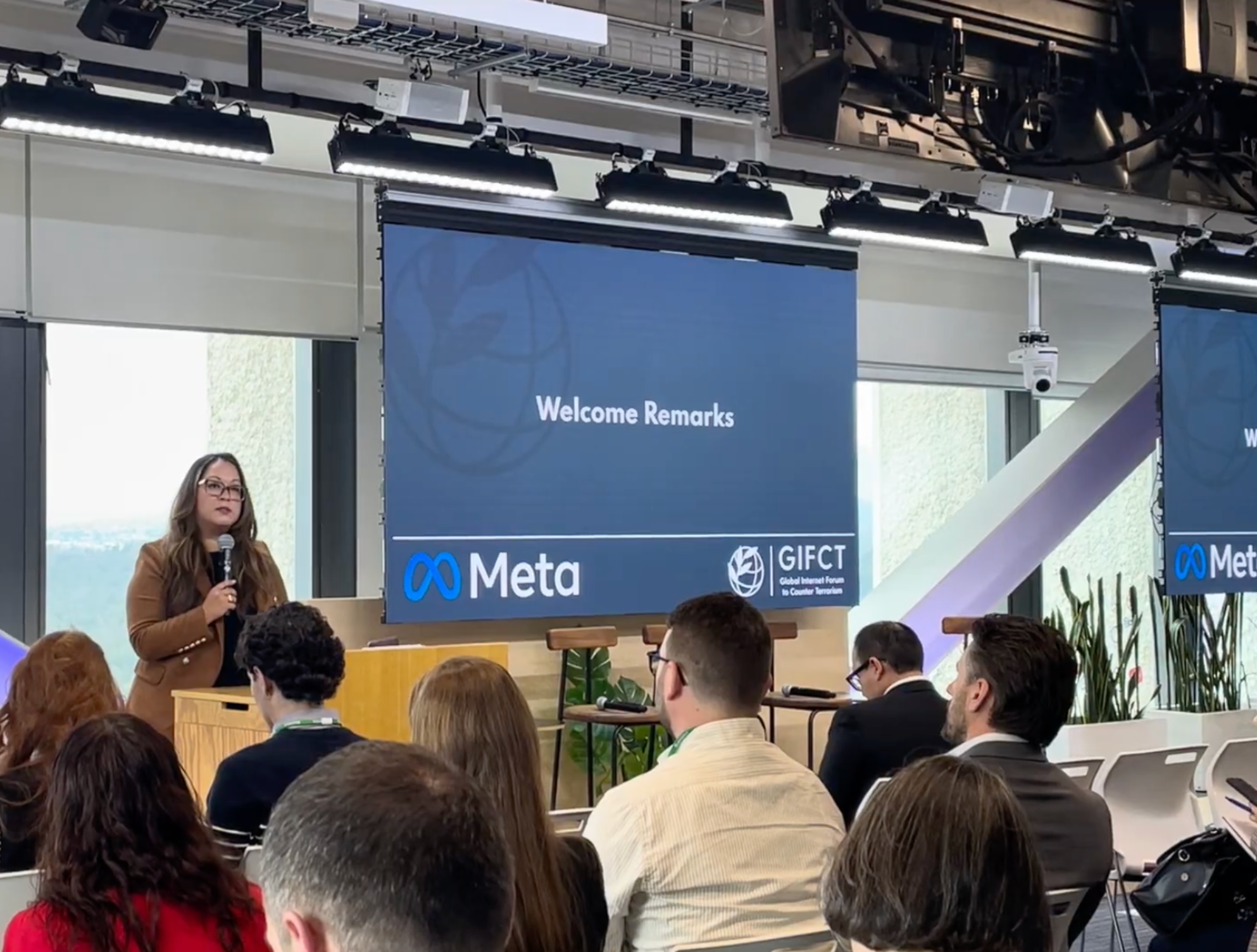
Opening remarks from GIFCT Executive Director Naureen Chowdhury Fink set the scene against a threat landscape that has evolved dramatically over the past three decades. Perpetrators are increasingly young, radicalizing and mobilizing faster, and often less ideologically committed, leaving them vulnerable to a range of violent extremist and criminal groups, she emphasized.
Building on discussions at GIFCT and Meta’s recent side event in New York on the margins of the opening of the UN General Assembly, Executive Director Fink highlighted the research and findings of several expert speakers who noted that while criminal and terrorist actors may overlap in tactics, behaviors, and impacts, they often diverge in strategic goals, and that groups of concern and designations vary significantly by region. This raises numerous questions across different jurisdictions and organizations, and concerns about classifications, response measures, and human rights guardrails.
To address evolving threats and hybrid harms, she emphasized, GIFCT has been focused on supporting member companies by evolving its signal-sharing work and suite of resources. One of GIFCT’s 2026 multi-stakeholder Working Groups, the Signals Community of Practice, offered member companies opportunities to explore innovative ways to evolve signal sharing and to pilot new tools. The human rights implications of evolving signal sharing also remain a key consideration as GIFCT works with members and its community of global multi-stakeholders to develop an approach that reflects these complex dynamics.
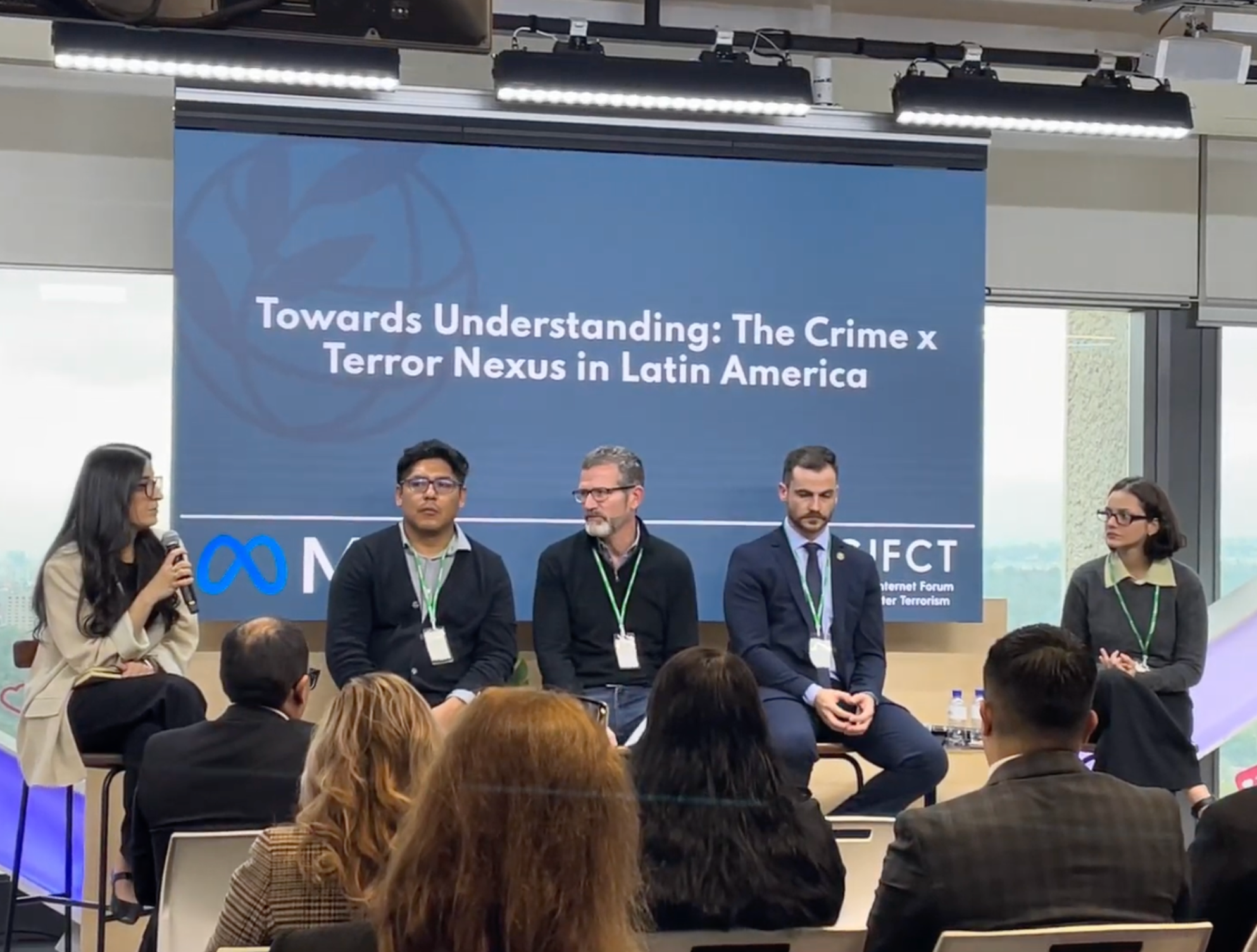
Towards Understanding: The Crime x Terror Nexus in Latin America
The first panel, moderated by Dr. Nagham El Karhili, GIFCT’s Director of Membership Engagement, brought together researchers and academics from Latin America and beyond to examine how terrorism, violent extremism, and crime intersect across the region.
Definitions featured prominently throughout the discussion, and several panelists distinguished between means and goals: criminal organizations may adopt terrorist tactics and techniques, but their ultimate aim is typically financial rather than political or ideological. Others noted that for many organizations and states, for an actor to be considered a terrorist, there must be a religious, political, or ideological motive, though behavioral indicators are increasingly weighed as motives may be ideologically unclear. This was highlighted by another speaker who noted that the most resilient criminal groups are often political from the outset, building a constituency before evolving their tactics to generate revenue and advance their goals.
The speakers made the point that as some terrorists and violent extremists may be less ideologically rigorous, and as some criminal organizations may leverage violence to advance sociopolitical aims, existing definitions and policy frameworks may not account for these realities. In response, the discussion highlighted the potential benefit of collaboratively developing new definitions while recognizing the challenges attributed to such an undertaking.
For several panelists and states, Nihilistic Violent Extremism (NVE) has emerged as a key concern, challenging existing boundaries and labels. Its ideological diffusion and span over a wide range of harm types pose several distinct challenges, including the amorphous nature of the associations or membership, the focus on youth as both victims and perpetrators, and the transnational nature of the groups.
Looking ahead, panelists identified youth vulnerability to criminal and terrorist organizations as the region’s most pressing challenge over the next five years. This is compounded by numerous sociopolitical challenges, including public health concerns. One speaker pointed to data showing that 20% of Brazilians aged 10 to 20 experience a mental health disorder, yet the majority do not receive adequate care. Speakers warned of a generation growing up in hybrid online violent ecosystems where violence and hate are normalized, and of the risks posed by growing political polarization, weakening state institutions, and a widening gap between government understanding of technology and the pace of its development.
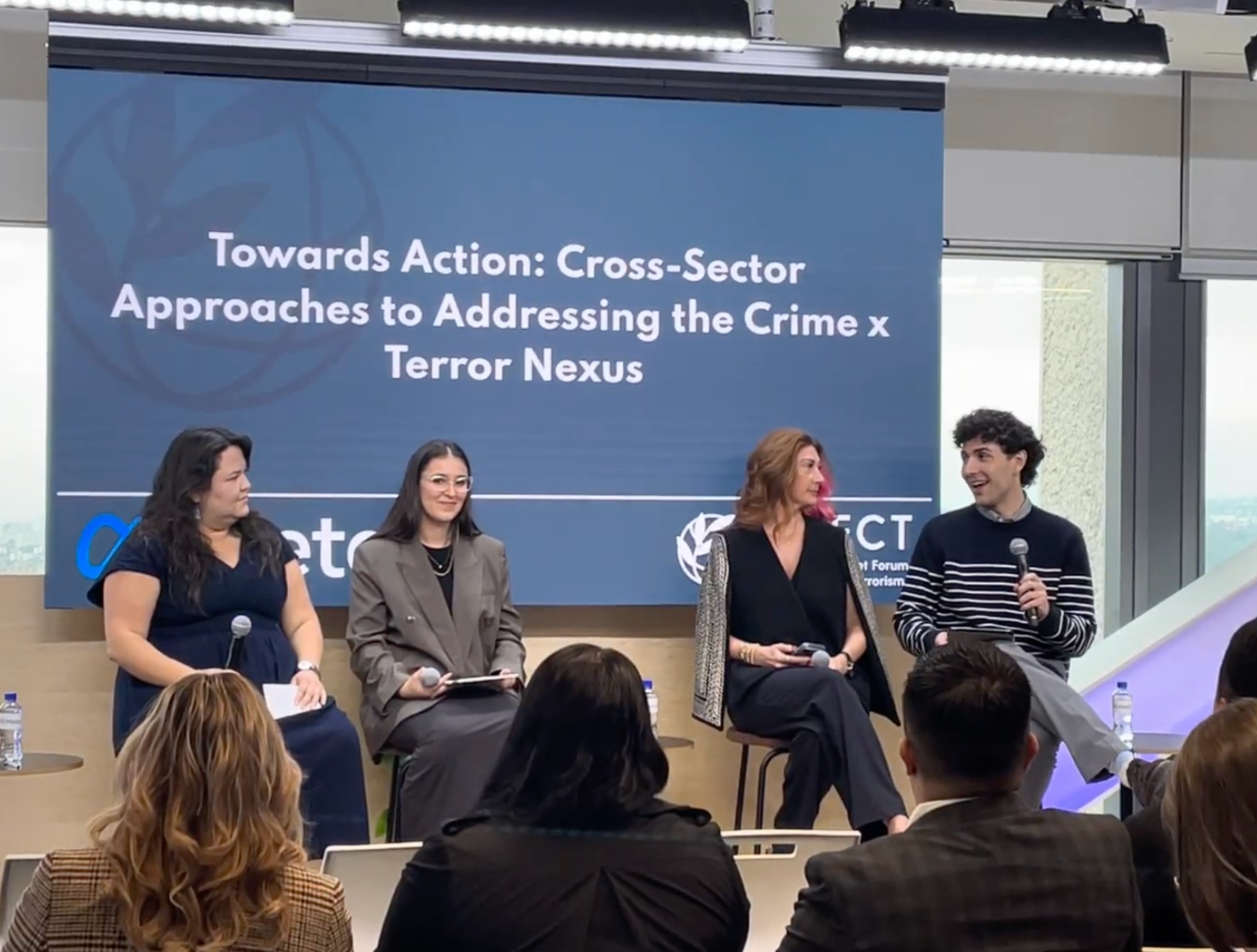
Towards Action: Cross-Sector Approaches to Addressing the Crime x Terror Nexus
The second panel, moderated by Skip Gilmour, GIFCT’s Director of Trust & Safety Solutions, featured perspectives from GIFCT member tech platforms and a Mexican civil society organization working with youth.
Speakers highlighted ways they had evolved approaches in response to adversarial adaptation. These required agile enforcement systems and investing more in prevention approaches grounded in policy and supported by the full range of enforcement options and specialized investigative teams to ensure a comprehensive approach to addressing online harms.
The discussion also highlighted the importance of collaboration to address threats posed to local communities. Successful partnerships, it was noted, start by recognizing that each sector sees a different part of the problem, and must move from information sharing to response. One example shared was a digital prevention chatbot, built with multi-stakeholder input, to help youth recognize warning signs, question suspicious offers, and know what to do before recruitment occurs.
Speakers acknowledged that platforms do not always have the depth of local expertise that researchers and community organizations bring, and highlighted the value of stronger ties with civil society organizations that understand the intricacies of local communities. Collaborations, they noted, allow platforms to design solutions that keep pace with harms in this space.
Turning to cross-functional communication within platforms, panelists discussed how specialized teams focused on harms like terrorism or child safety can work together on threats that cut across traditionally siloed workstreams. Approaches included building investigators’ knowledge across threat types and actors so that no individual becomes a single point of failure, drawing on resources such as the Global Network on Extremism and Technology, GIFCT’s academic research arm, to understand the full threat landscape, and maintaining the flexibility to adapt as threats converge.

Closing Remarks
The event closed with remarks from Secretario de Seguridad Ciudadana de la Ciudad de México Pablo Vázquez Camacho (the Secretary of Citizen Security of Mexico City). While the threat landscape has evolved, Secretary Vázquez Camacho observed, the factors that draw people into crime remain the same ones sociologists have studied for decades. However, constant exposure to harmful messaging is driving radicalization among young people, increasingly expressed through violence rather than political or social causes, and tech platforms and governments share a responsibility to create avenues for safe expression and minimize harm.
Civil society organizations, he noted, play a particularly important role in bridging communities and authorities, building trust, and informing policy and practice. On the designation of cartels, the Secretary suggested that recent policy decisions reflect a moment in time, that groups will continue to operate regardless, and that the more pressing question is how designations shape regulatory and compliance decisions across jurisdictions, where harmonization will be essential.
Members Session: Evolving GIFCT’s Signal Sharing
In a members-only session, GIFCT presented the evolution of its signal-sharing work designed to help members tackle terrorist and violent extremist content more effectively and respond to incidents more systematically. Discussions focused on understanding the threats and trends facing member tech platforms and ways in which GIFCT tools could support their responses, including through feedback on resources in development.
Looking Ahead
The Mexico City workshop underscored the complex evolution of terrorist, violent extremist, and criminal threats, both offline and online, and the challenges these pose for policymakers, practitioners, and industry. The shift towards an increased focus on behavioral indicators for many companies underscored the need to examine classifications and policy frameworks that may not reflect contemporary developments in several regions. Discussions highlighted the importance of continuing to invest in prevention, local and regional expertise, and cross-sector collaboration, and ensuring that responsive measures are grounded in data and human rights obligations.
View Insights PDF View Insights PDF (Spanish)