Madrid, Spain – On Thursday, April 16th, GIFCT cohosted a regional workshop with Spain’s Intelligence Center for Counter-Terrorism and Organized Crime (CITCO), housed under Spain’s Ministry of the Interior, to foster collaborative discussion among governments, civil society, tech platforms, and regional subject-matter experts and deepen understandings of regional threats and trends shaping terrorism and violent extremism content online.
The event began with introductory remarks from GIFCT Executive Director Naureen Chowdhury Fink and the Director of CITCO, Francisco Javier Marín, who outlined CITCO’s priority of engaging with industry and identifying collaborative approaches to improving online safety while respecting human rights. Highlighting the importance of cross-sector and cross-platform collaboration, Executive Director Fink underscored the value of multistakeholder partnerships and how the expertise and feedback of GIFCT’s global community of partners inform its work.
“Strengthening networks between governments, companies, and civil society organizations across Europe and with global partners is critical to ensuring we can respond quickly and effectively when challenges arise. GIFCT is committed to continuing to support this collaboration through our tools, partnerships, and research,” she said.
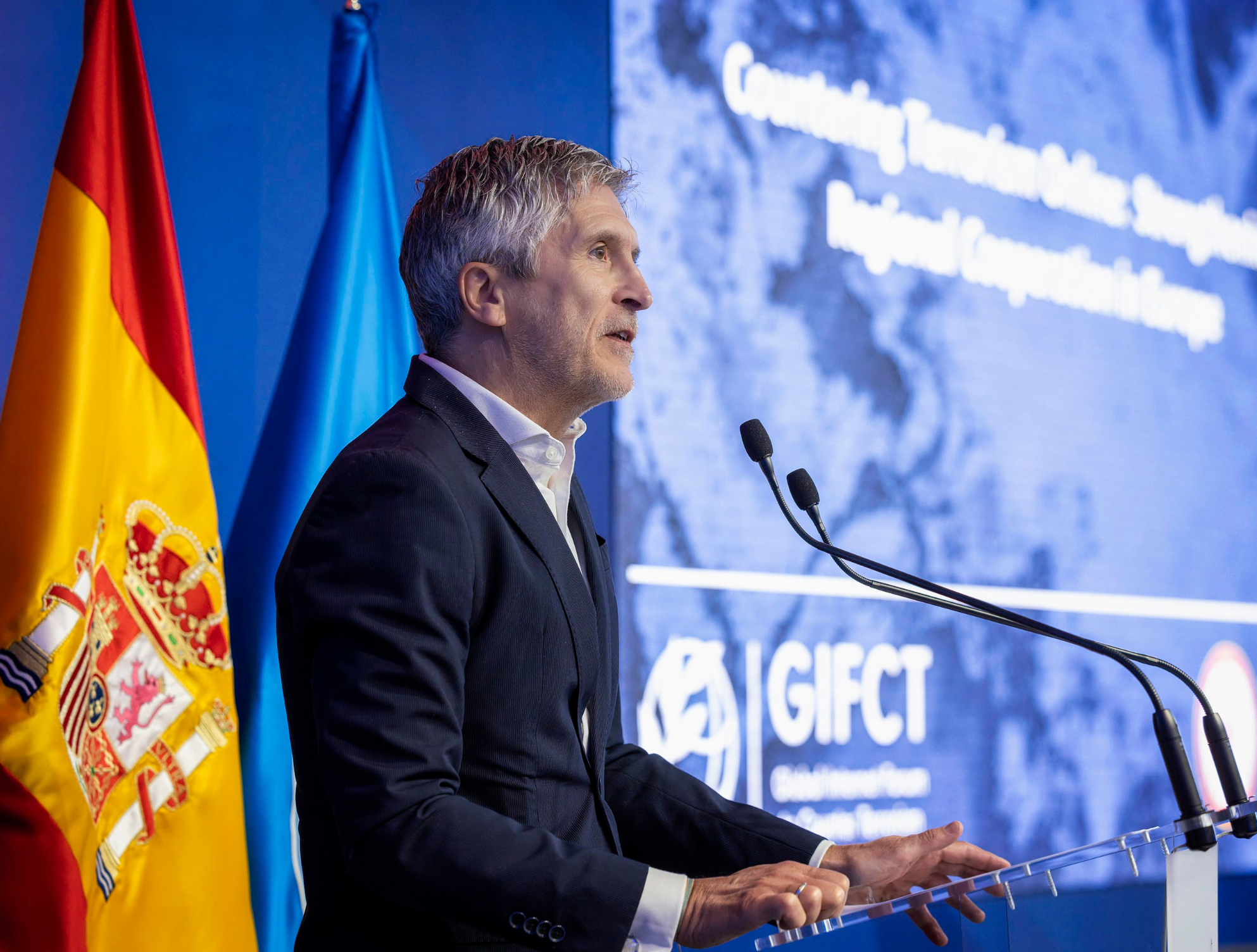
Spain’s Minister of the Interior, Fernando Grande-Marlaska
Spain’s Minister of the Interior, Fernando Grande-Marlaska, gave the Keynote Address. Spain’s priorities include working closely with tech to strengthen counterterrorism capacities, he underscored. Building more flexible processes that enable stakeholders to proactively address the harms of today’s threat landscape would be essential, he said, noting that as perpetrators skew younger and the boundaries between harm types blur, cooperation and collaboration would become increasingly important. As emerging technology facilitates new threats and opportunities, it’s now more important than ever, the Minister reiterated, that we counter terrorists and violent extremists while building online spaces that respect rights and freedoms.
“As providers of a tool that has become essential for our personal, professional, and social lives, digital platforms also bear a public responsibility to ensure the safety not only of their own digital environments and users, but also of society as a whole,” Grande-Marlaska concluded.
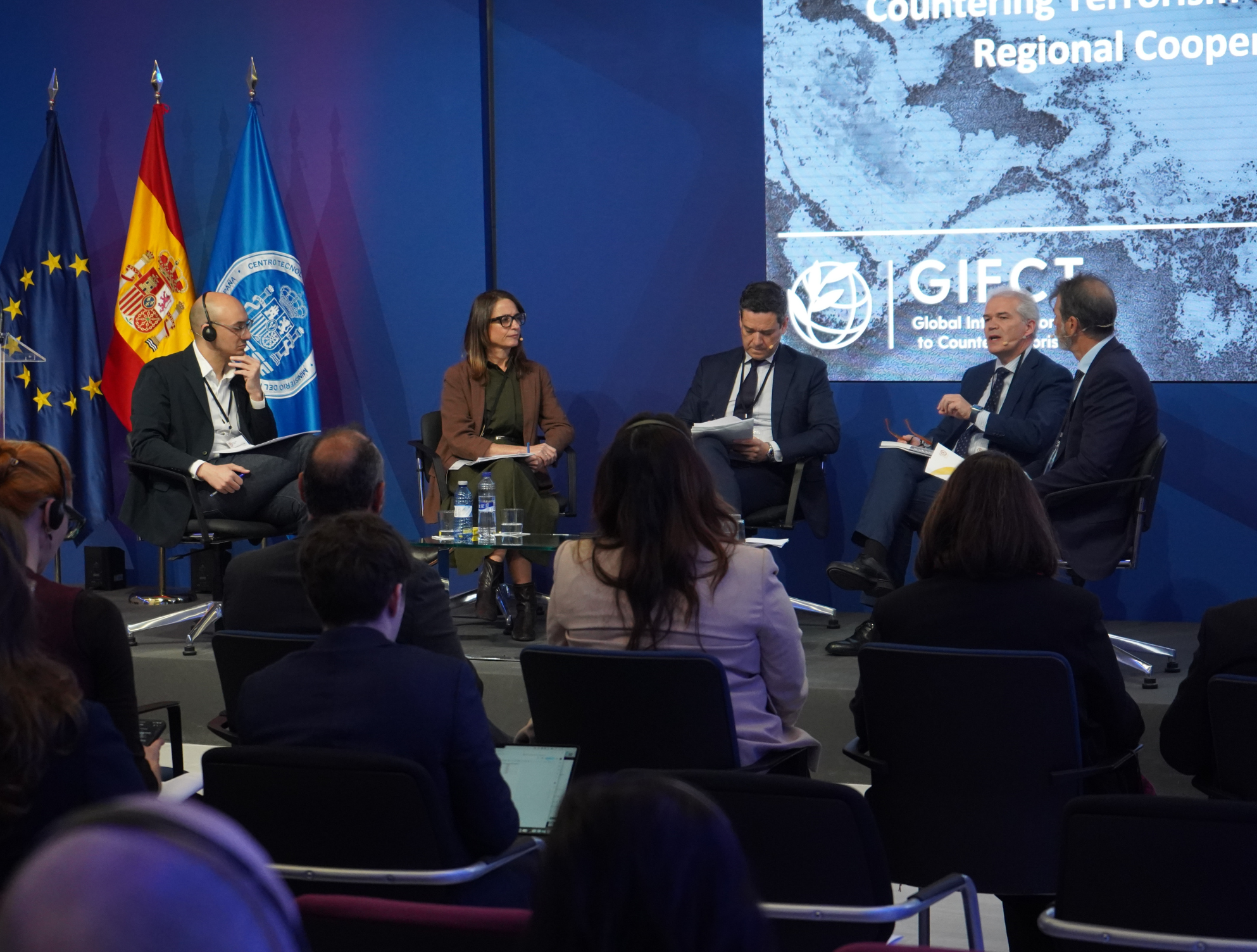
The State of Play: Expert Researchers and Government Threat Assessments
The State of Play: Expert Researchers and Government Threat Assessments
The first panel provided updates from the perspectives of Spanish law enforcement agencies and experts who outlined threats and trends across Spain and Europe more broadly. CITCO, a panelist noted, conducts its counterterrorism work as outlined in the 2023 National Counter Terrorism Strategy (NCTS). While the NCTS lists jihadism as a primary threat, Spanish law enforcement agencies have seen an increase in harms rooted in white supremacist and nihilistic violent extremist (NVE) narratives. While ideology once played a central role in shaping the intent of terrorists and violent extremists, they explained, more perpetrators appear motivated by violence alone, requiring consideration of new approaches to prevention and mitigation.
Echoing the Minister’s Key Note address, panelists shared widespread concern about the increasing emphasis on youth among both perpetrators and victims across the ideological spectrum. Across the panel, presenters stressed the importance of building collaborative, flexible frameworks to address harms that occur outside traditional categories. They stressed the need to identify and act on risk factors for young users while doing so in a rights-respecting way.

The Importance of Public-Private Partnerships
The Importance of Public-Private Partnerships
Cross-sector partnerships are critical to enabling parties to manage risk, share information, detect signals more quickly, and respond and recover in more coordinated and effective ways. The UN’s Vulnerable Targets Program helps to protect public spaces, critical infrastructure, and “soft targets” (e.g., public spaces, houses of worship, tourist sites) by strengthening member states’ capacity to prevent, protect, mitigate, investigate, respond to, and recover from terrorist attacks. Illustrating how these relationships might play out in a real-time attack, a UN representative underscored the importance of connecting responders from government, the private sector, and affected communities.
Speakers highlighted the importance of trusted relationships in developing stronger public-private partnerships. An industry speaker reiterated the point by highlighting a platform’s involvement in past Referral Action Days (RADs) in partnership with Europol, during which they focused on actioning jihadist content. The productive engagement has led to more collaboration between the platform and other government initiatives. Partnerships between tech, academia, and governments are critical not only for improving online safety and protecting people, places, and freedoms, but also for building and maintaining confidence in our institutions, our elected officials, and the private sector, a panelist concluded.
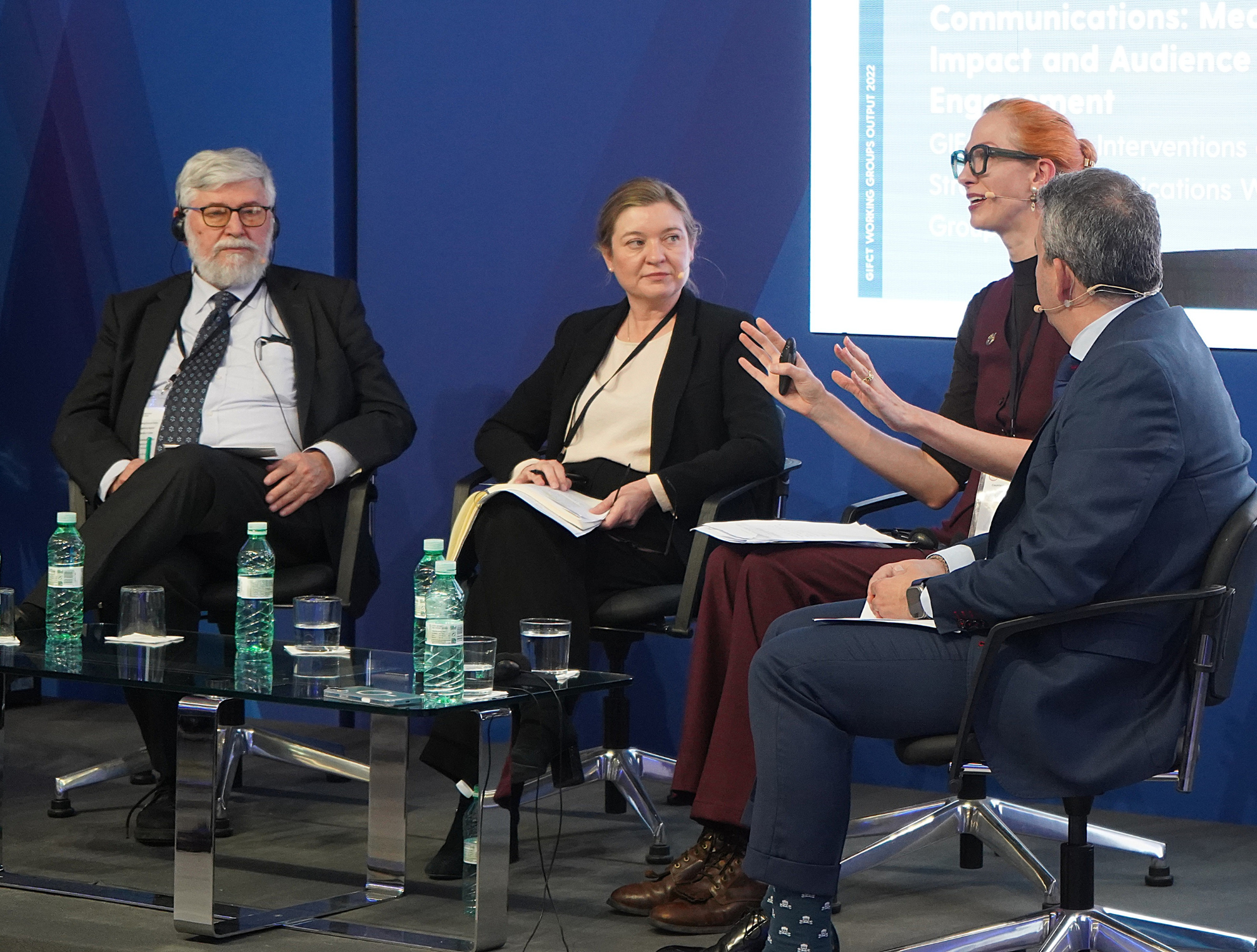
Programs for Countering Terrorism and Violent Extremism
Programs for Countering Terrorism and Violent Extremism
The third panel provided an overview of existing programs for building and strengthening resilience in countering harms online. GIFCT Senior Director of Membership and Programs Dr. Erin Saltman shared insights from GIFCT’s 2025 Working Group on youth radicalization and mobilization and highlighted the recent launch of the Campaign Toolkit, an online resource provided by GIFCT designed to help activists of any type take action against terrorism and violent extremism online.
Speakers stressed the importance of remembering the human impacts and costs of terrorism. To highlight these, the Memorial Centre for Victims of Terrorism is partnering with the Spanish government and schools to integrate victims’ perspectives into counterterrorism education through a combination of alternative teaching tools, including websites, videos, and video games designed for youth across the age spectrum. Panelists also stressed the importance of prevention and of disrupting the process of radicalization, and highlighted CITCO’s work in this regard. Compliance with the requirements of the Digital Services Act (DSA) supported these goals, a speaker stressed. These partnerships, the speakers agreed, have been instrumental in disrupting bad actors, improving public engagement, and strengthening relationships among government, civil society, and industry in their shared mission to counter terrorism and violent extremism online.
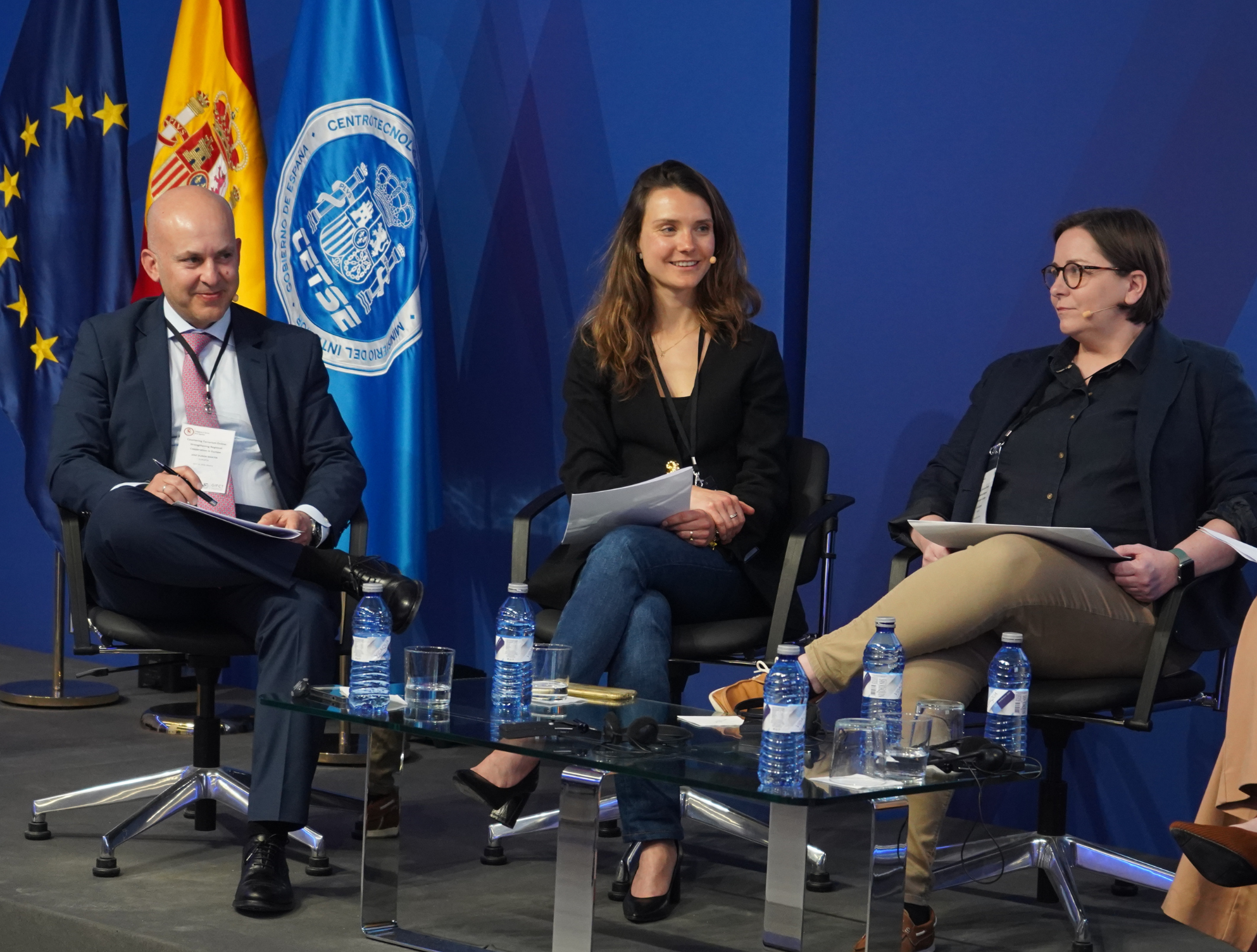
Approaches to Moderation, Crisis & Incident Response
Approaches to Moderation, Crisis & Incident Response
Tech companies and policymakers shared illustrative examples of their approaches to moderation, crisis management, and incident response during the last session. GIFCT companies discussed the evolution of content moderation practices and the spectrum of approaches ranging from reactive content moderation to ethnographic, networked approaches to address overlapping online harms. They also highlighted the concrete value add of the cross-sector collaboration that GIFCT facilitates through our Incident Response Framework.
The EU Online Crisis Response Framework has evolved to include a process for alerting governments and law enforcement in real time as an event unfolds, a speaker highlighted. The updated framework covers incident-related content and prioritizes safeguarding victims, while the EU Internet Referral Unit is designed to provide investigative and operational support to law enforcement and tech platforms, panelists shared. The Unit detects, analyzes, and refers publicly available terrorist and violent extremist content online, aiming to restrict its accessibility through its key tools, she explained.
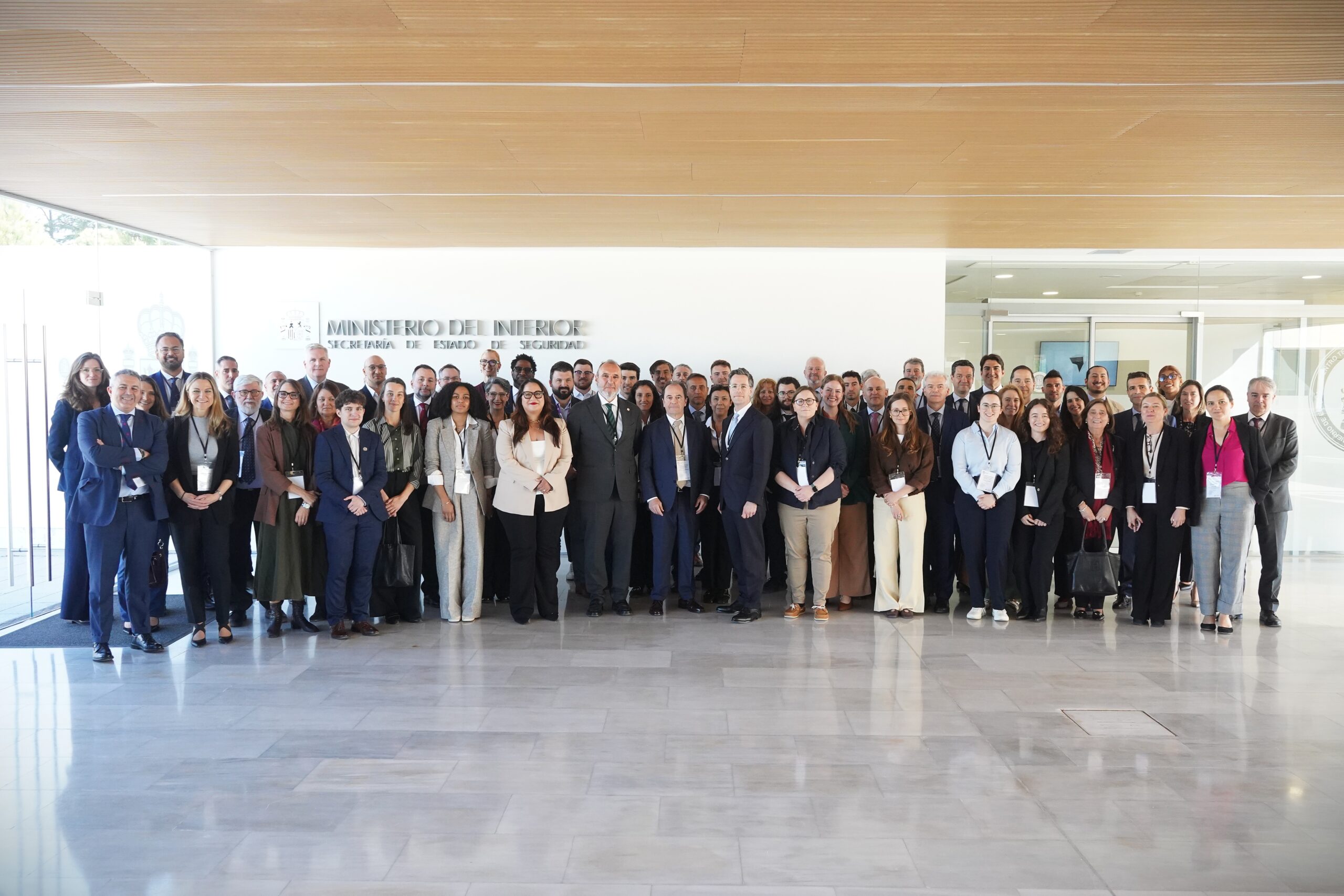
“Countering Terrorism Online: Strengthening Regional Cooperation in Europe” regional workshop
Key Findings and Next Steps
The discussions underscored the importance of increasing focus on and support for young people who are being increasingly targeted online. As hybridized tactics blend different harm types, evolving counterterrorism practices to address these evolutions is critical. Speakers emphasized that while governments, law enforcement, and industry must collaborate on innovative approaches to disrupting bad actors, this must be done in a way that preserves civil liberties, including freedom of expression, and human rights obligations. Research conducted by the United Nations Development Programme (UNDP), for example, has highlighted that experiences of human rights violations at the hands of the state can be a key factor in radicalization, and speakers stressed the importance of building trust across sectors to address these complex issues.
Related Research and Analysis
As an extension of the discussions during the event, please see the following collection of expert Insights on the intersection of terrorism, violent extremism, and child exploitation from our academic research wing, the Global Network on Extremism and Technology (GNET).
View Insights PDF View Insights PDF (Spanish)