The Global Internet Forum to Counter Terrorism (GIFCT) was pleased to co-host a side event with Meta, GIFCT’s 2026 Operating Board Chair, on the margins of the opening of the 81st session of the UN General Assembly. The event convened leading representatives from industry, government, and civil society to examine areas of convergence and divergence between terrorist and violent extremist groups and criminal organizations.
Opening remarks from GIFCT Executive Director Naureen Chowdhury Fink set the scene against widespread concern about increasingly hybrid online subcultures and offline harms, which can intersect with, generate, or amplify terrorist content online. Across many of these harms, perpetrators are increasingly young, often acting individually through inspiration rather than as members of a formal group or cause, and radicalizing or mobilizing at unprecedented speeds, posing challenges for law enforcement, industry, and communities alike.
Fireside Chat
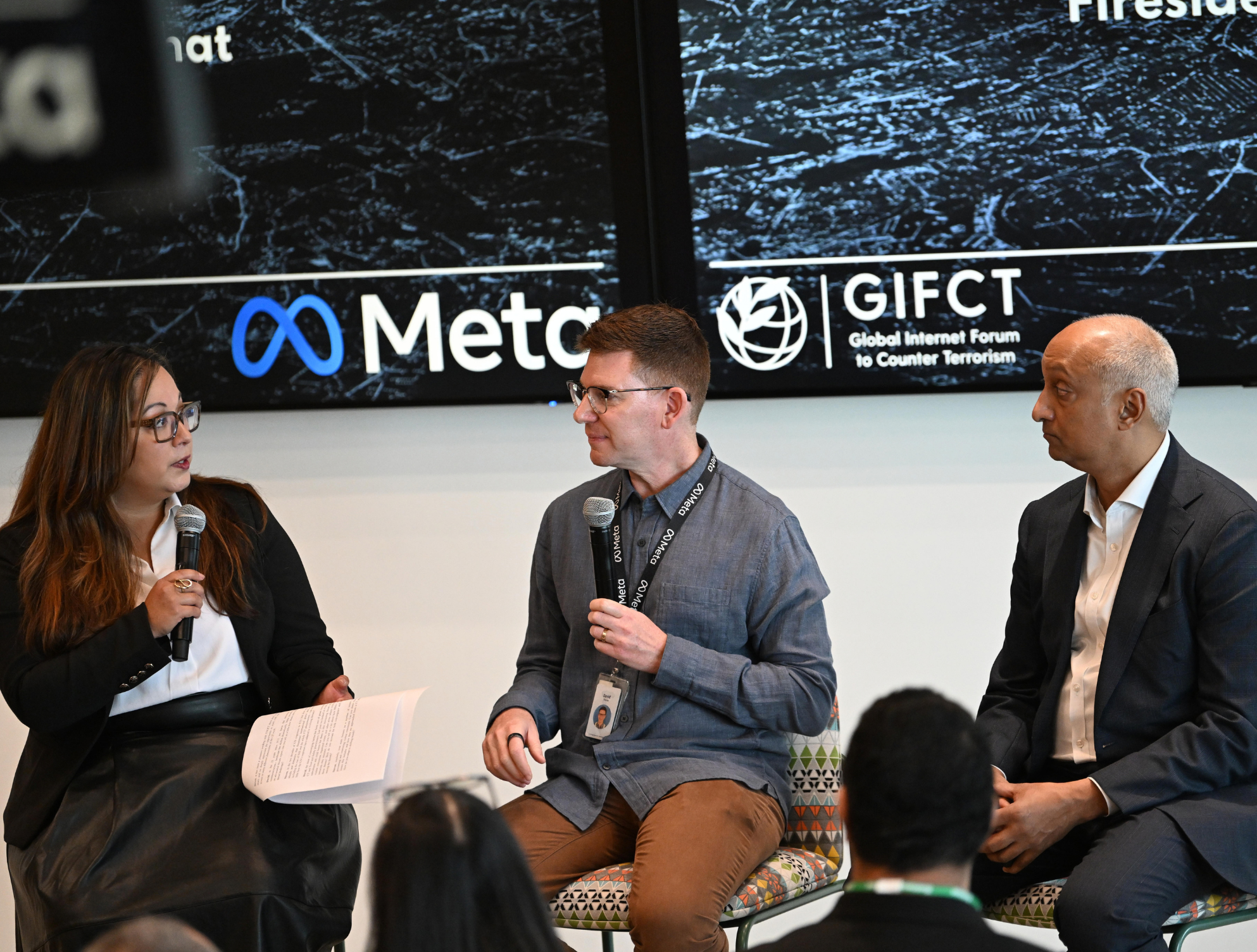
The event opened with a fireside chat featuring Executive Director Fink, Meta’s Director of Dangerous Organizations and Individuals Policy, and the Deputy Director of the UN Counter-Terrorism Center in the Office of Counter-Terrorism, bringing together industry and multilateral perspectives on how the terrorism and counterterrorism landscape has shifted.
While finding and removing adversarial actors remains a focus and area of investment, speakers noted, enforcement against groups is not enough on its own. From a multilateral perspective, top-down frameworks are now meeting bottom-up efforts, with a strong focus on building trust with the communities they serve.
Speakers also discussed how to account for both convergence and divergence among threats without working in silos. One approach shared was to ground policy in behavior, treating groups that advocate or commit violence consistently, supporting both downstream enforcement and upstream prevention. Governments, speakers noted, must similarly adapt their policies to reflect evolving threats, with human rights at the core of that work.
Because terrorists and violent extremists use different platforms for different purposes – from youth recruitment to financing and coordination – and move between services to avoid enforcement, no single platform can address these harms alone. The eventual evolution of GIFCT’s signal-sharing work, informed by the findings of GIFCT’s Signals Community of Practice, was highlighted as a key way to empower member trust and safety teams to identify and share harmful content in a secure, efficient, and rights-respecting way.
Evolving Threats and Trends: Exploring the Crime x Terror Nexus
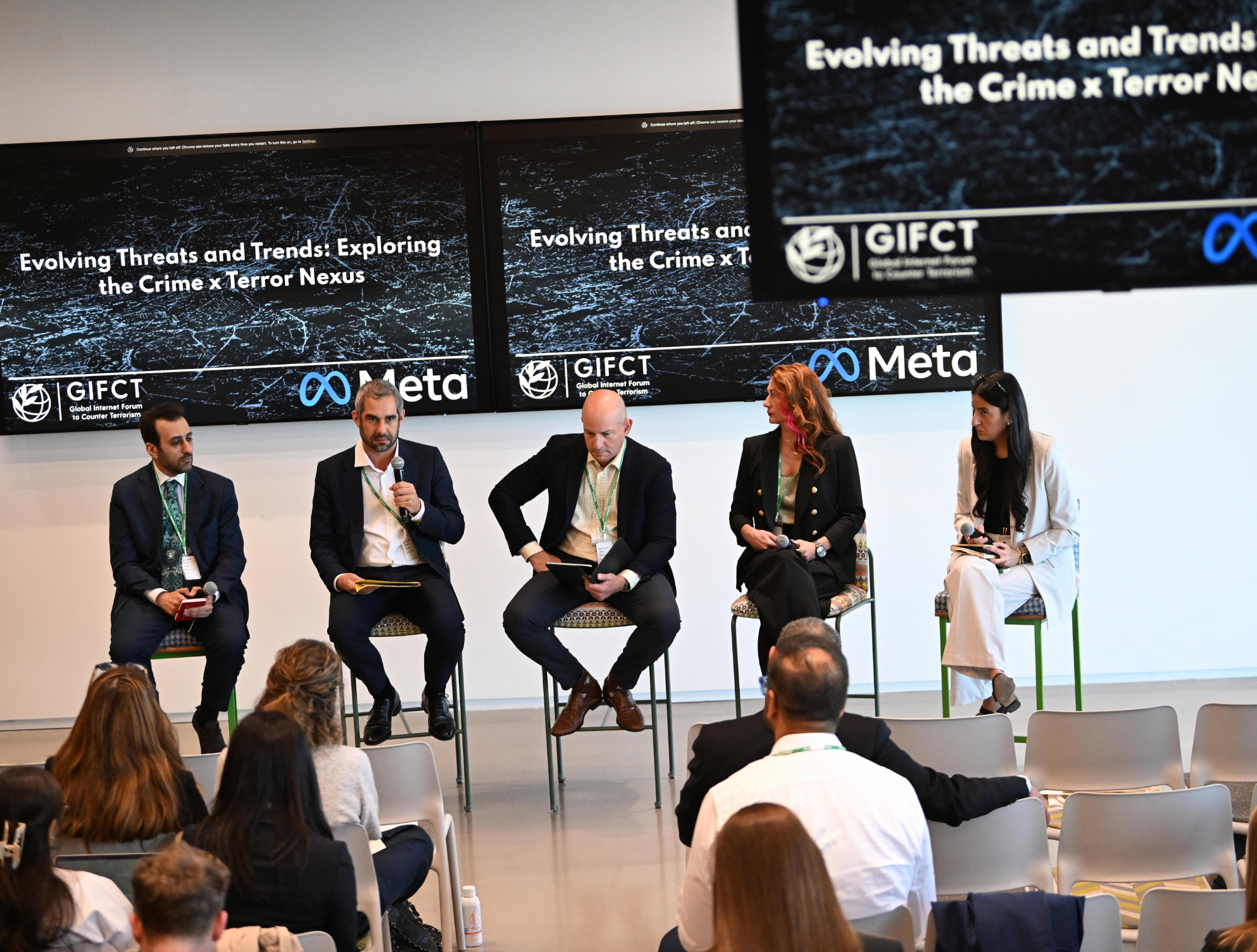
The first panel brought together representatives from government, civil society, and the tech sector to examine current nexus points between terrorism, violent extremism, and crime, and to consider their implications for industry and practitioners.
Panelists stressed the importance of defining terrorism, violent extremism, and crime precisely. Several speakers stressed the divergence between cartels and terrorist groups given the focus on profit versus ideology, respectively. For an actor to be considered a terrorist, panelists noted, there must be an ideological hook, and approaches that blur this distinction risk being counterproductive for both policy and practice.
Rather than full convergence, one speaker suggested, the relationship between crime and terrorism is better understood as a continuum. At one end, groups borrow methods from one another; further along, they form alliances of convenience, such as terrorist groups using smuggling networks to generate profit. Panelists added that expanding designation lists to include criminal organizations presents a significant challenge for platforms developing policies to address related content.
Speakers largely agreed that harms are increasingly overlapping online. Recruitment, radicalization, and incitement now span multiple platforms, meaning that any one platform often sees only one piece of a larger picture. Industry speakers emphasized that even platforms where a threat such as nihilistic violent extremism is less prevalent need to understand the entirety of that threat to know what to look for, underscoring the importance of cross-platform collaboration.
Looking ahead, panelists identified platform hopping and rapidly evolving tactics as a major challenge, with adversaries moving faster than policies, tooling, and enforcement can keep up. Government participants called for faster, more efficient coordination with tech companies, while civil society speakers stressed the need to bridge the online-offline disconnect and to apply a localized lens. Noting the value of GIFCT’s hash-sharing database and Incident Response Framework for cross-platform signal sharing, industry representatives expressed their interest in further evolving industry tools and collaborative efforts to meet the challenges faced by trust and safety teams.

The Path Forward: Policies, Positive Interventions, and Tooling
The second panel examined lessons learned and good practices for mitigating related harms in an increasingly multi-dimensional threat landscape, drawing on industry, practitioner, and international experience in preventing/countering violent extremism, countering organized crime, and youth-specific interventions.
Speakers first shared how their tools and approaches are evolving alongside adversarial tactics. On visually driven platforms, seemingly harmless, aesthetically coded imagery can link elsewhere or become harmful when grouped, prompting work to remove violating content upstream while filtering and downranking content so that search and recommendation systems do not amplify it.
Other examples included threat detection that links violators across harm types, such as child sexual abuse material and other criminal activity, and moving beyond keyword detection toward behavioral signals specific to emerging harms. Behavioral threat assessment resources, such as glossaries and guides, and in-depth research into online communities were described as critical for trust and safety teams, particularly as users find ways around automated review.
Drawing on clinical expertise, one speaker cautioned that youth radicalization should not be framed primarily as a mental health issue, but as one shaped by behavioral, parental, access, and environmental factors. The speaker emphasized that understanding the function an ideology serves is critical before offering alternatives, and that prevention requires spaces where young people can build rapport with trusted adults and be forgiven for mistakes.
Education and empowerment also featured prominently, from games and trainings that help users recognize risks and build resilience to approaches that involve teachers, coaches, and others outside a securitized response. Local perspectives and regional partnerships were also seen as essential. Examples shared included an intensive coaching program for young community moderators in Southeast Asia, engagement with game developers, digital literacy training for law enforcement, and partnerships with schools to explain AI good practices.
Asked what stakeholders should prioritize, speakers urged moving from what is useful to what is usable, underscoring the value of including young people and affected communities in designing approaches and solutions. Industry participants called for greater investment in organizations across the ecosystem and opportunities for enhanced signal sharing, noting that sometimes a harm is too great not to share.
Looking Ahead
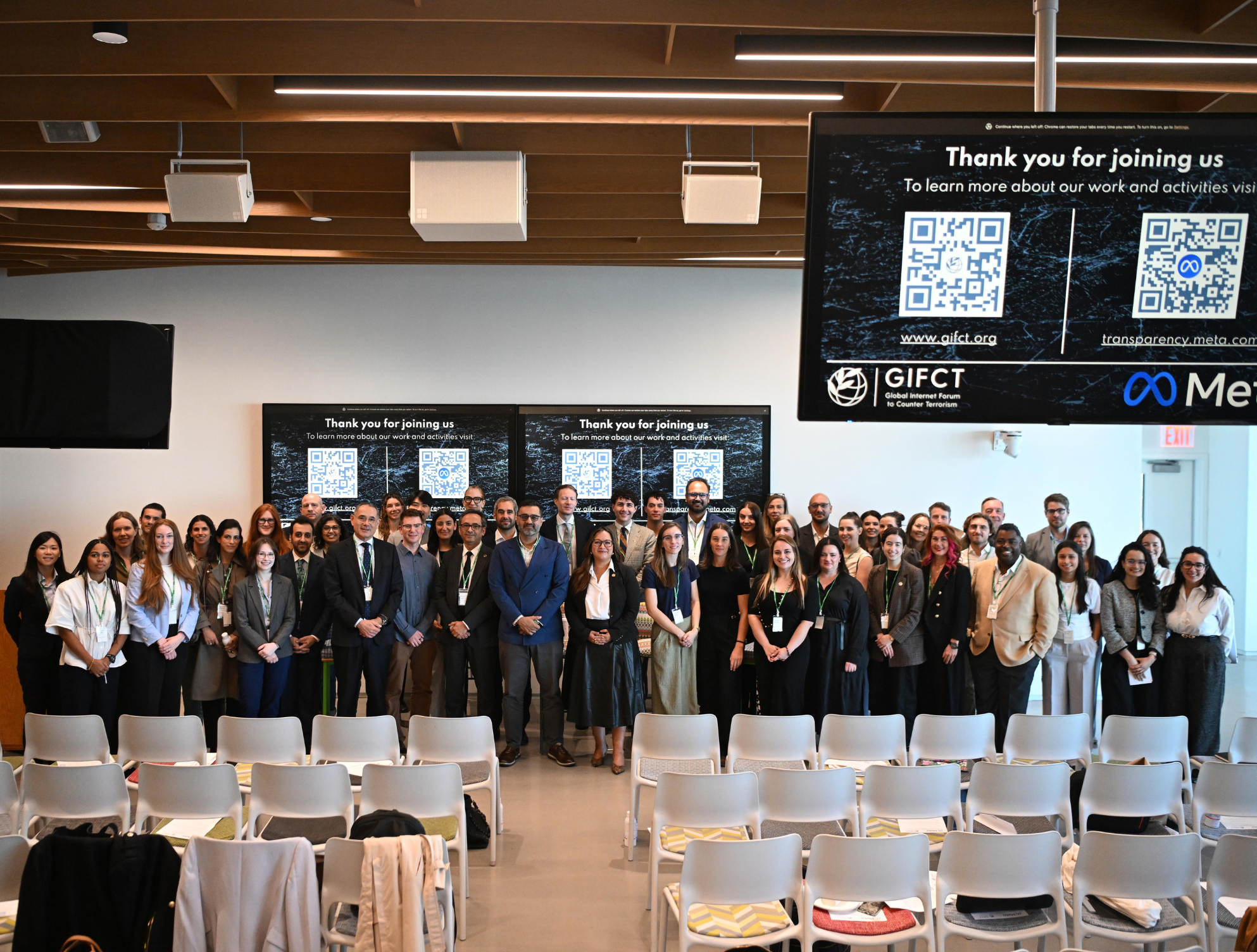
The event affirmed that addressing the crime, terrorism, and violent extremism nexus requires both clarity and collaboration: clarity in classifying and understanding criminal organizations, terrorist and violent extremist groups, and collaboration to address hybrid harms that increasingly span platforms, sectors, and geographies. Participants called for greater investment in, and empowerment of, organizations and initiatives across the P/CVE ecosystem, and for continued efforts to strengthen cross-platform signal sharing. As threats continue to evolve, GIFCT remains committed to convening its multi-stakeholder community and equipping its members with the tools, resources, and partnerships needed to pair effective moderation with prevention models grounded in trust, local perspectives, subject matter expertise, and cross-sector collaboration.